Die endemische Pflanzenwelt und die Ureinwohner der Kanaren.The endemic plants and the original inhabitants of the Canary Islands!
 Teneriffa ist die größte der 7 Kanaren-Inseln und liegt nordwestlich vor der afrikanischen Küste. Trotz der großen Entfernung vom europäischen Festland gehört es zu Spanien. Die natürliche Vegetation Teneriffas ist sehr vielfältig. Sie reicht von der Meeresküste bis in die schwindelnd hohen Regionen des Teide (3718 m). Er ist der höchste Berg Spaniens. Tenerife is the biggest island of the Canary Islands in the northwest of the African coast but it is a part of Spain! The natural vegetation of Tenerife varies. It spans from the coast to the highest mountain of Spain - the Teide with 3718 m.
 Diese besondere geographische Lage ermöglicht auf den Kanaren eine einmalige Pflanzenwelt. Heute möchte ich Euch die ursprüngliche vorstellen, die schon zu Zeiten der Ureinwohner hier gedeihte. Hinsichtlich der Pflanzenvielfalt sind die Kanaren sicher mit die interessanteste Region auf unserem Planeten. Eingeteilt wird nach 7 unterschiedlichen Pflanzengesellschaften (ohne die Einwanderer!). Ich habe jeweils ein Bild für das entsprechende Habitat und eine endemische Pflanze dazu ausgewählt.The geographic location of the Canaries provides unheard of flora and vegetation. Today I would like to show you the original vegetation before the time of the colonization. The Canaries are one of the most interesting regions in regard to botany in the whole world. There are seven plant societies (without the exotic immigrants from America, Africa and Asia). I have chosen one picture each applying to the specific habitat and one endemic plant.
 Die "halophile Küstenvegetation" ist eine azonale Pflanzengesellschaft, die von der Bodenbeschaffenheit (Gestein, Sand) und chemischen Bedingungen (salzreicher Küstengürtel) bestimmt wird. Als Beispiel zeige ich den kanarischen Endemiten Schizogyne sericea, einen kleinen verholzenden Strauch, der zu den Asterngewächsen gehört. The 'halophilous coast vegetation' is an azonal plant society which is dictated by the ground (rocks and sand) and the chemical prerequisite (salt from the sea). Here you can see an Canarian endemit 'Schizogyne sericea', a little shrub who is an Asteracea.
 Die Pflanzen der zweiten, der sogenannten Basisstufe entwickelten sich unter bioklimatisch sehr trockenen Bedingungen. Hier leben viele interessante Überlebenskünstler mit Anpassungsstrategien wie Sukkulenz, Blattabwurf, Haarbildung etc.. So gedeihen hier die typischen Tabaibales und Cardonales - dominante Euphorbiengesellschaften.The plants of the second, so-called basic step are living in a very dry climate. Here are very interesting survivors with adaptive behaviors such a being succulent, losing leaves or growing hair and so on. They are Tabaibales and Caronales - dominating Euphorbia societies.
 Dieser Raubwürger (Lanius excubitor) sitzt auf einer Euphorbia canariensis,die hier mächtige Stämme bildet, auch sie ist ein Endemit, den es nur auf den Kanaren gibt. Die außergewöhnlich große Anzahl an endemischen Pflanzen ist darauf zurückzuführen, daß die Kanaren Ozean-Inseln sind. Sie erhoben sich in Folge starker Vulkantätigkeit direkt aus dem Meer und hatten nie Festlands-Bindung. This bird, called the Great Grey Shrike (Lanius excubitor) is sitting on top of 'Euphorbia canariensis' which is an endemic plant that can be found only on the Canary Islands. The unusually large number of endemic plants is due to the Canariy Islands being ocean islands which evolved because of strong volcanic activity directly out of the ozean and have never had a relationship to the mainland.
 Auch die dritte Pflanzengesellschaft ist bioklimatisch bedingt, es sind die "Thermoskerlophyll-Vegetationen", vor allem wärmeliebende Hartlaubgewächse. Da mein Bruder viele Pflanzen dieser Gesellschaft in seinem Hanggarten im Norden Teneriffas pflegt, zeige ich das Bild aus seinem Garten als Habitat-Bild. Ich wurde schon mehrfach gefragt, wie man mit ihm Kontakt aufnehmen kann, um in diesem schönen Ambiente Urlaub zu machen. Schaut einfach unter www.ferienfincas.de nach, dort findet Ihr die Übernachtungsmöglichkeiten in diesem Garten.
The third plant society has found its origin due to bioclimatic conditions as well. They are the 'Thermoskerlophyll-vegetationes" hard leaved plants, which love the warmth. My brother has been cultivating a lot of these plants in his garden in the North of Tenerife. Therefore, I would like to show you a picture out of his garden as a sample of the habitat of these plants. Some of you have contacted me for the address of my brother to go there on a holiday. Just have a look at this link http://www.ferienfincas.de where you can find possibilities to stay overnight in this garden.
 Ein Beispiel für diese Pflanzengesellschaft ist die 'Globularia salicina' ein Kugelblumengewächs. Aber auch der berühmte Drachenbaum, oder die im obigen Bild zu sehende Kanarenpalme sind typische alte einheimische Gewächse dieses Habitats.An example of this plant society is the 'Globularia salicina' . However the famous 'Dracena Draco' or the 'Phoenix canariensis' in the picture of my brother 's garden are typical domestic plants in this habitat.
 Die Passatwinde ermöglichen auf den Luv-Seiten der Kanaren die 4. Gesellschaft, die der Subhumiden Bergstufe: der Monteverde. Diese fast durchweg immergrüne Bergwald- und Strauchvegetation entstand auf etwa 600 - 1200 m Höhe. Es gibt keinen Wassermangel, aber auch keinen Hitzestau, so gedeihen hier Lorbeer und kanarischer Ilex genauso wie Erica und Myrte.The trade wind helps to build the fourth society - the sub-humid Mountain Step: the Monteverde. This evergreen mountain forest can be found at levels of 600 - 1200 m. There is no water shortage, but no heat accumulation as well and because of this you will find Laurus, Ilex, Erica and Myrica.
 Ein schöner Vertreter der Monteverde-Vegetation ist Isoplexis canariensis. Wie viele andere endemische Pflanzen, ist auch diese Heilpflanze unter Naturschutz. Es gibt mehr als 500 Endemiten auf den Kanarischen Inseln! Damit Ihr eine Ahnung von dieser Besonderheit bekommt - Großbritannien, das 34 x so groß ist, wie alle kanarischen Inseln zusammengenommen, besitzt nur 16 endemische Pflanzen!
'Isoplexis canariensis' is a wonderful example for the Monteverde vegetation. This medicinal plant is protected under the nature conservation decree like the most of the Canary endemic plants. More than 500 endemic plants grow on the Canary Islands! In comparison in Great Britain, which is 34 times the size of all Canary Islands, only 16 endemic plants can be found.
 Die 5. Vegetationsstufe ist die der trockenen Bergstufe: der Kiefernwald. Er bildet den natürlichen Gegensatz zur luftfeuchten Monteverde-Vegetation. Hier ist es meist trocken und man findet weniger Arten. Die kanarische Kiefer hat die besondere Eigenschaft, Wald-Bränden lange widerstehen zu können.The fifth vegetation step is the dry mountain step - the pine forest. It's the natural contrast to the Monteverde-Vegetation. Pines growing on the Canary Islands can resist fire for a long time.
 Die Pflanze, die mich auf Teneriffa am meisten begeistert, wächst hier, Echium , auf deutsch der Natternkopf. Es gibt verschiedene Sorten in den verschiedensten Vegetationszonen Teneriffas.
The plant who is growing here is Echium. I love it. In the different vegetations steps of Tenerife you can find different species of Echium.
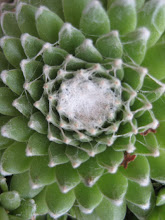
 Die vorletzte Stufe gehört wieder zum azonalen Typ, wie die Erste! Es sind die Felsen-Vegetationen, wie man sie auf verschiedenen Höhenlagen, häufig in den Barrancos (kahle Bergschluchten, die teilweise Wasser führen) oder Riscos (die Steilklippen über dem Meer) findet. Da gibt es Spezialisten, wie z. B. das Aeonium tabulaformae, das es tatsächlich schafft, sich an senkrechte Wände wie ein Teller hinzuschmiegen.
The step before last is also an azonal type like the first one. Here are the rock vegetations. They can be found on different levels, most often in Barrancos (gorges) or Riscos (cliffs). There are a lot of specialties, for example the Aeonium tabulaformae, it's growing directly in a vertical rock wall.
 Dies hier ist allerdings das Aeonium arborescens, das ebenfalls diese Bedingungen schätzt.
This Aeonium arborescens appreciates the rocky conditions as well.
 Wir sind in schwindelnden Höhen angelangt, die letzte, wieder eine bioklimatische Stufe ist die Vegetation der Suprakanarischen Stufe - die Strauchvegetation der Gipfelregionen in Höhen um 2000 m und mehr. Der Endemitenanteil beträgt hier auf Teneriffa gut 80 %!
We 've now reached the peak; the last - bioclimatic step is the Supracanarian step - the vegetation of the shrubs of the peak growing at levels of 2000 m and higher.
 Noch einmal ein Echium, ich finde es zu beeindruckend!
Here is another Echium - isn 't it impressive?
 Diese Pflanzengesellschaften fanden sich hier konkurrenzlos bis zu dem Zeitpunkt, als die ersten Eroberer auf dem Weg nach Amerika unterwegs waren.These plant societies had no rivalry until the first explorers where on their way to the Americas.
 Zu dieser Zeit gehörten die Inseln den Guanchen. Diese Urbevölkerung der Kanaren (mit neolithischer Kultur) lebte bis zum 14. Jhdt. auf den verschiedenen Inseln auf unterschiedlichen Entwicklungsstufen.During that time the islands belonged to the Guanchen. These original inhabitants of the Canary Islands (Neolithic background) used to live on various islands with different developemental steps until the 14th century.
 Als die Spanier, Portugiesen und andere Europäer regelmäßig auf den Inseln landeten und sie nach und nach in Besitz nahmen, vermischten sich die Guanchen mit den Neuankömmlingen, oder wurden in die Bergregionen zurückgedrängt, wo sie sich aber nur bis zum 18. Jhdt. halten konnten.When Spanish and Portuguese sailors began to arrive regularly at the Canary Islands, taking them into possession one after the other, they mixed with the Guanchen or they were displaced taking refuge in the mountainous regions where they were able to stay only until the 18th century.
 Genau das gleiche Schicksal erlitt die Pflanzenwelt der Kanaren. Da auf dem Weg nach Afrika, Asien und vor allem Amerika diese Inseln die letzten Stationen waren, um frisches Wasser und Lebensmittel auf die Schiffe zu bringen, bekamen sie schnell eine wichtige strategische Bedeutung. Auf der Rückfahrt brachten die Seeleute immer regelmäßiger die wunderbarsten Pflanzen aus den Tropen mit.The plant world of the Canary Island suffered exactly the same fate. Since the islands were the last stop to provide the ships with fresh water and food before going to Africa, Asia and most of all America, these islands became more and more strategically important. When the ships returned from other continents they often brought the most impressive plants from the tropics.
 So sind unberührte Plätze, in denen noch viele einheimische Pflanzen zu finden sind, wie hier der berühmte "Mercedes"-Wald im Nordosten der Insel, selten geworden.Places, like this famous 'Mercedes'-Forest in the North East of the Island, are rare now.
 Farne, Moose und Flechten haben hier eine besonders geheimnisvolle Ausstrahlung.The endemic ferns, moss and lichen have a very mysterious charisma.
 Wenn man im Anaga-Gebirge (Nordosten) wandert, trifft man noch häufig auf Höhlen, in die sich die Guanchen zurückgezogen hatten. Ursprünglich hatten sie dort ihre Toten bestattet. If you roam in the Anaga mountains (North East) you may very often find caves in which the last Guanchen lived. Originally they used to bury their dead persons there.
 Aber man findet auch die alten Spuren der Christianisierung und Besiedelung, hier ist es im Teno-Gebirge im Nordwesten der Insel.In the Teno-Mountains in the northwest of the Island I found old traces of the Christianization and colonisation.
 Ich habe die alte Schildkröte (Opuntia-Kaktee) im Garten meines Bruders gefragt, wann und wieso sie hierhergekommen ist. Was sie mir über sich und andere exotische Pflanzen erzählte, ist jedoch eine andere Geschichte.I asked the very old tortoise (Opuntia Cactea) in the garden of my brother why and how long she has been here. She 's told me a lot about herself and other exotic plants but this is another story.
Thank you Andrea for helping me in this translation.
 Ja, wir sind wieder bei der uralten Schildkröte im Garten meines Bruders www.ferienfincas.de . Auf die Frage, wie sie hierhergekommen ist, erzählte sie die spannende Geschichte von den Helden, die über die Weltmeere fuhren, neue Kontinente entdeckten und Unmengen an bis dato unbekannten Pflanzen über Teneriffa nach Europa brachten.
 Viele Europäer, vor allem Spanier ließen sich ab dem 15. Jhdt. auf den Kanaren nieder. Nach 1479 gehörten die Inseln zu Spanien und wurden zur wichtigen Basisstation für die Expeditionen, hauptsächlich nach Amerika. Hier ist das Rathaus von Icod de los Vinos (Teneriffa) zu sehen, im noch heutzutage weitverbreiteten Kolonialstil. Besonders dekorativ finde ich daran die oft reichgeschnitzten Holzbalkone.
 Teneriffa wurde Umschlagplatz, Auffangort, Handelsplatz und Proviantstelle für alle Schiffe, die unweigerlich hier vorbeimußten auf ihren Routen nach Amerika, Australien, Afrika oder Asien. So gelangten schon früh subtropische und Tropengewächse hierher, die bald heimisch wurden, da sie das milde Kanarenklima gut vertrugen.
 Die verschiedensten Gehölze aus allen Erdteilen wurden eingeführt.
 Bananen, Tomaten und Kartoffeln gediehen prächtig und sind noch heute ein wichtiger Exportzweig der Kanaren.
 Aber am beeindruckendsten ist die Vielfalt der exotischen Pflanzen aus aller Welt, die den Weg hierherfanden. Am Ende des 18. Jhtds. förderte die Einrichtung eines Gewächshauses in La Orotava auf Teneriffa die Einführung von herrlichen Bäumen und Blumen aus aller Welt. So ist Teneriffa nicht nur eine Königin der endemischen Flora, ihre Großzahl an eingeführten Pflanzen, darunter auch die alte "Schildkröten-Opuntie" aus Amerika, ist immens. Botanische Größen, wie Alexander von Humboldt waren schon fasziniert von dieser grandiosen Mischung.
 Tauchen wir doch einfach ein in den botanischen Garten von Puerto de la Cruz auf Teneriffa, wo viele dieser Einwanderer genauso zu bewundern sind, wie in den öffentlichen Anlagen und Gärten der Canarios. Ich lasse Euch jetzt mit der phantastischen Import-Botanik Teneriffas alleine, spaziert einfach durch die kleinen Wege und entdeckt königliche Palmen und kleine Ziertabakblüten, dicke Sukkulenten und schlanke Bananengewächse.
 Aloe buhrii, South Africa
 Breynia disticha, Florida
 Dichorisandra thyrsiflora, Brazil
 Calliandra haematocephala, Brazil
 Caryota mitis, Java, Malacca
 Cuphea jorullensis, Mexico
 Brillantaisia nitens, Africa
 Ixora coccinea, India
 Ficus with Bromelias, South America
 Passiflora, South America
 I don' t know! You? Wer kennt diese Schönheit, ich leider nicht?!
 Ficus, Asia
 date palm, Arabia
 Sanchezia nobilis, Ecuador
 Spathodea campanulata, Gabon
 Nymphaea Hybrids
 Bougainvillea spectabilis, Brazil
 Tibouchina granulosa, South America
 Eucharis amazonica, South America
 Heliconia bihai, India
 Ficus macrophylla, Lord Howe Island
 Ravenala madagascariensis, Madagascar
 Oh, ist es Euch jetzt etwas zu warm geworden? Dann kühlt Euch doch nicht allzu weit vom Botanischen Garten entfernt, im "Loro Parque" ab, bei diesem netten Eisliebhaber und seinen vielen Kameraden, oder bei den Haien im Aquarium, oder.....!!! Ja, Teneriffa hat viele Überraschungen parat, ich werde meinen Bruder sicher dieses Jahr wieder einmal besuchen und freue mich schon auf ihn und "seine" Insel.